

When you step into a modern airport or high-speed rail station, what first catches your eye? Besides the spaciousness and smooth flow, those seemingly ordinary waiting chairs are quietly becoming key details in measuring the green quality of transportation hubs. Today, let's explore how eco-friendly public seating can become a powerful fulcrum for enhancing the sustainable image of a venue.
I. Material Innovation: Defining Green from the Source
Traditional airport chairs and high-speed rail station benches mostly use non-renewable materials. Today, leading transportation hubs are adopting recycled plastic airport seats, eco-friendly metal high-speed rail station seats, and bamboo-wood composite public seats. These low-carbon material waiting benches not only present a natural texture visually but also reduce the carbon footprint from the source.
For example, energy-saving airport waiting chairs made from recycled plastic can convert a considerable number of waste plastic bottles per chair, making the story of resource recycling accessible. At the end of their lifespan, most of the materials in these recyclable high-speed rail station benches can still re-enter the recycling system.
II. Design Upgrade: Integrating Intelligence and Environmental Protection Modern eco-friendly waiting area seating has transcended its simple function of providing rest. Energy-efficient seats with integrated solar panels offer USB charging services; modular assembly of public seating allows for partial replacement of damaged parts, significantly extending overall lifespan and reducing waste.
Durable eco-friendly waiting area seating features reinforced structures and anti-fouling coatings, adapting to high-traffic environments and reducing maintenance frequency and the use of chemical cleaning agents. This sustainable design embodies the concept that "long-term use is the greatest environmental protection."
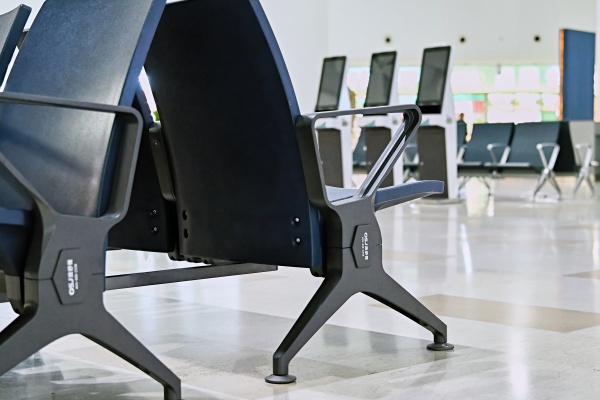
III. System Layout: Creating an Immersive Green Experience.
Clustering eco-friendly airport seating with clear environmental labeling effectively conveys green information. For example, "The seats in this area are made from 100% recycled materials, equivalent to reducing carbon emissions by XX kilograms." This allows passengers to intuitively perceive the environmental contribution while resting.
By combining greenery and energy-saving lighting, green, recyclable airport furniture can become part of an ecological micro-landscape, enhancing the comfort and humanistic care of the waiting environment and strengthening the user experience of eco-friendly rest seating.
IV. Communication Value: A Green Carrier That Tells a Story.
Each set of low-carbon travel seating serves as a storyteller of sustainability. Hub operators can showcase environmental achievements through data visualization, such as "This year, by using eco-friendly seating, we have cumulatively reduced carbon emissions by XXX tons," enhancing public trust.
Media and passengers spontaneously sharing these ingeniously designed eco-friendly public seats can generate secondary dissemination on social media platforms, transforming the transportation hub's green commitment into a visible, tangible, and shareable physical image.
Conclusion: From airport chairs made of renewable materials to smart, energy-efficient waiting chairs, eco-friendly seating has moved from back-end facilities to front-end branding. They silently yet powerfully declare: green travel begins with every seat. Investing in these details is not only fulfilling environmental responsibility but also a wise choice for shaping the core competitiveness of future hubs—because the best brand image is precisely those daily experiences that intimately connect with users and continuously create value.