

In industries such as electronics manufacturing, semiconductors, and precision instruments, ESD (electrostatic discharge) chairs are an essential component of electrostatic protection systems. However, many companies find that newly purchased ESD chairs develop various issues within less than six months, necessitating premature replacement. Why is the replacement frequency for ESD chairs so high?
The primary reason is the rapid degradation of antistatic performance in low-cost, inferior-quality ESD chairs. Industry observations indicate that low-quality ESD chairs often fail after just three to six months of use due to issues such as the oxidation and rusting of caster axles or the breakage of ESD grounding chains. These problems are often inconspicuous, making them difficult for companies to detect in time without a routine inspection protocol.
Specifically, the need to replace ESD chairs after six months is largely due to wear and tear on the following components:
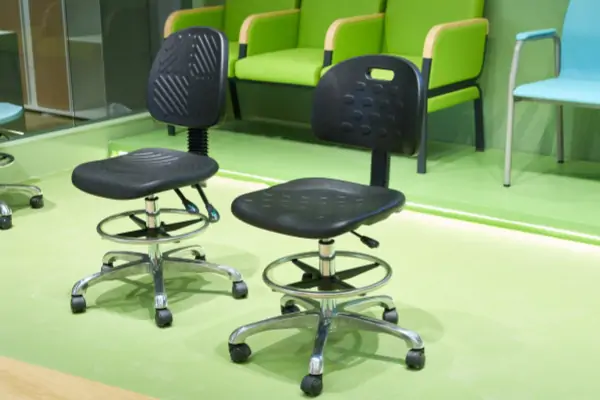
Antistatic Casters: Conductive casters or those made of dissipative materials wear down during frequent movement, leading to reduced antistatic performance. Inferior casters can also scratch epoxy resin flooring or shed particles, compromising the cleanliness of cleanrooms.
Grounding Chains: Metal conductive chains are prone to breakage or poor contact caused by prolonged friction against the floor, preventing the effective dissipation of static electricity.
Gas Lift Cylinders: Frequent height adjustments can cause gas leaks in the cylinder, compromising both safety and user comfort.
Antistatic Upholstery: Repeated friction on PU foam or leather seat cushions increases surface resistivity, thereby reducing the ability to dissipate static electricity.