

ESD chairs (anti-static chairs) are standard equipment in electronics factories, laboratories, and cleanrooms. However, many purchasing agents have found that despite paying a high price, some ESD anti-static chairs crack, peel, and crumble within a year. This is not just an aesthetic issue; it can also affect the stability of the anti-static chair's resistance value, directly threatening product yield.
Core Reason 1: Inherent Material Inadequacies Low-priced ESD chairs on the market often use ordinary PVC leather with a surface coating of anti-static agent. This type of anti-static leather has an extremely thin conductive coating that wears off after a few daily frictions and cleanings. Once the anti-static performance deteriorates, the base material loses its protection and is prone to cracking. High-quality anti-static PU leather, on the other hand, incorporates conductive carbon powder into the raw material during the overall foaming process. The anti-static PU chair surface is evenly conductive from the inside out, increasing its wear resistance several times over.
Core Reason 2: Cutting Corners in Base Material and Thickness When the density of the seat foam is insufficient or the leather layer thickness is less than 1.2mm, the chair will severely stretch and deform after sitting on it. Frequent weight-bearing deformation of ESD chairs can directly tear leather fibers, especially in the elbow friction area of ESD chairs with armrests, where peeling occurs even faster. Properly made anti-static work chairs use high-resilience cold-blown foam with a thickened wear-resistant layer and pass ESD surface abrasion tests (such as the RCA paper tape abrasion test).
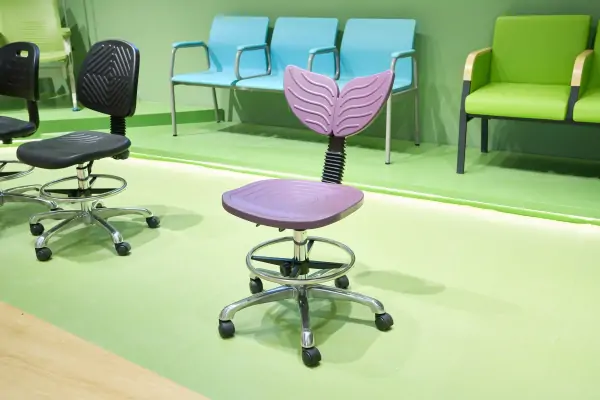
Core Reason Three: Environmental and Maintenance Factors Exacerbate the Problem Cleanroom ESD chairs are exposed to drastic temperature and humidity fluctuations. During dry seasons, if not used in conjunction with anti-static flooring and ionizers, the sudden release of static electricity accumulated on the chair surface accelerates material aging. Simultaneously, using strong alkaline cleaners or hard-bristled brushes directly damages the surface resistance layer of the ESD chair, leading to premature cracking.
How to Choose an ESD Chair That Won't Crack?
Remember the "Three Looks" Principle:
Look at the Material: Prioritize one-piece molded anti-static PU foam chair surfaces, avoiding coated PVC.
Check the testing: Request a factory report showing an ESD resistance value of 10⁶~10⁹Ω for the chair surface, and pay attention to the abrasion resistance cycle (≥100,000 cycles is preferred).
Check maintenance: Regularly wipe with a damp cloth containing neutral detergent, keep the anti-static chair's grounding chain unobstructed, and avoid direct sunlight.
While a poorly durable ESD chair may seem cheaper, the hidden costs due to frequent replacements and product contamination are actually very high. Choosing an anti-static work chair supplier certified by ISO and SGS, and requesting a material property data sheet for the ESD chair surface, is the long-term solution to ensure workshop safety.