

In electronic manufacturing, SMT workshops, cleanrooms, laboratories, and other environments, ESD anti-static chairsare almost standard equipment. However, many purchasing managers and frontline supervisors encounter the same problem:
The anti-static function is achieved, but people can't sit comfortably for long periods.
Prolonged sitting leads to back pain, stuffiness, and limited adjustability, ultimately affecting employee efficiency and even increasing turnover. So, how should a truly qualified ESD industrial chair strike a balance between anti-static performance and ergonomic comfort?
1. Ergonomic Design: A comprehensive solution for discomfort from prolonged sitting.
Modern high-end ESD chairs incorporate several ergonomic technological innovations specifically addressing the problem of discomfort from prolonged sitting:
The adaptive lumbar support system automatically adjusts the support force and position according to the user's posture. Whether typing while leaning forward or thinking while leaning back, it maintains the natural curve of the spine, effectively relieving lumbar pressure and preventing herniated discs.
The multi-point pressure distribution cushion combines high-density slow-rebound foam and breathable mesh fabric, evenly distributing pressure on the hips and thighs, preventing localized blood circulation obstruction and reducing "numbness in the buttocks."
The 4D adjustable armrests support multi-dimensional adjustment of height, width, angle, and front-to-back position, ensuring natural arm relaxation, reducing shoulder and neck strain, and preventing cervical spondylosis and frozen shoulder.
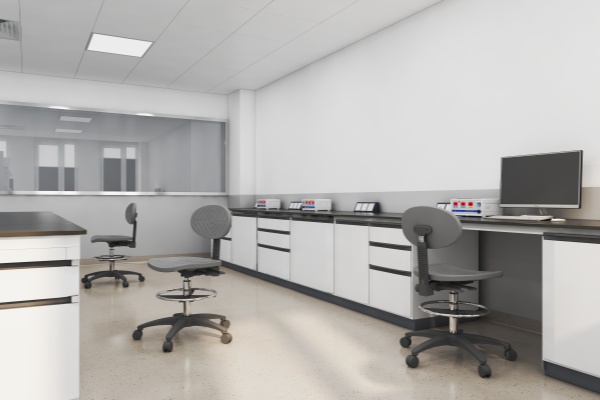
2. Electrostatic Protection Technology: An invisible safety barrier.
The full-channel electrostatic dissipation design ensures a continuous electrostatic discharge path from the human body to the ground. From the chair wheels and legs to the ground, every contact point uses conductive materials to ensure that static electricity is quickly discharged to the earth.
Surface resistance control technology keeps the chair's surface resistance within the ideal range of 10^6-10^9 ohms, safely dissipating static electricity without the risk of electric shock due to excessively low resistance.
Environmentally adaptable materials maintain stable electrostatic dissipation performance even in low-humidity environments (such as air-conditioned rooms), solving the problem of static electricity in winter.
3. How to choose the right ESD chair for you: Key indicators for balancing comfort and anti-static properties. • Certification Standards: Check for compliance with industry electrostatic discharge (ESD) protection standards such as ANSI/ESD S20.20 or IEC 61340.
• Adjustment Functions: Ensure the chair has adjustable features for seat height, depth, armrests, lumbar support, and other parts.
• Material Breathability: Choose breathable mesh fabric or perforated leather materials to prevent discomfort from sweating during prolonged sitting.
• Usage Scenario Matching: Select a chair with the appropriate protection level based on the electrostatic sensitivity level of the work environment.
4. Conclusion: An ESD chair is not just about being "comfortable enough to sit on."
In high-standard electronic manufacturing and laboratory environments, anti-static protection is the safety baseline, and comfort is the guarantee of efficiency. A truly professional ESD chair should allow employees to work safely and without fatigue for 8 hours or even longer.