

Have you ever felt tired due to uncomfortable seating while waiting at the airport? Airport waiting seats may seem simple, but they hide important details that affect the passenger experience. Today, let's delve into this: Should airport waiting area seating be made of metal, wood, or upholstered material?
A Comprehensive Comparison of the Three Materials:
1. Metal Airport Waiting Area Seating: The "Standard Answer" for High-Traffic Areas
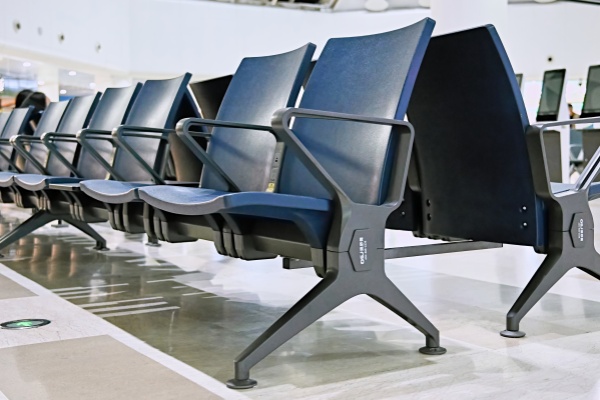
Metal-structured airport waiting chairs are the most common choice in airports worldwide.
• Core Advantages:
• Strong load-bearing capacity and stable structure, suitable for long-term, high-frequency use
• Aluminum alloy and stainless steel materials are corrosion-resistant and impact-resistant
• Easy to clean, meeting airport requirements for public hygiene and operational efficiency
• Service life of 8–15 years or more
• Applicable Scenarios:
Main waiting areas in terminal buildings
Concentrated waiting areas at boarding gates
High-traffic international and domestic departure halls
2. Wooden Airport Waiting Area Seating: Image Enhancement, but Not Mainstream
Wooden airport seating is more often found in areas where image is important, rather than for large-scale use.
• Advantages:
Visually appealing, enhancing the humanistic and high-end feel of the space
Suitable for integration with architectural style and cultural themes
• Limitations:
Sensitive to humidity and temperature changes, prone to deformation and cracking
High maintenance costs, requiring regular maintenance
Not suitable for ultra-high traffic, continuous use scenarios
• Applicable Scenarios:
VIP waiting areas
Business lounges
Specific areas of culturally themed terminals
3. Upholstered Airport Waiting Area Sofas: High Comfort, but Choose Carefully
Many buyers are attracted by the comfort of upholstered airport waiting area sofas, but in the special environment of an airport, upholstery is not a "universal solution." • Advantages:
Comfortable seating, suitable for long waiting times
More inviting, enhancing passenger satisfaction
• Potential Problems:
Leather/fabric is prone to wear and aging
Cleaning and maintenance costs are significantly higher than metal seats
High replacement frequency in high-traffic areas
• Applicable Scenarios:
VIP lounges
Business class waiting areas
International transit areas and other areas with longer layovers
4. From an airport operations perspective, how to implement a "combination selection" approach?
More and more airports are adopting a partitioned combination approach, rather than a single material for the entire area:
• Main waiting area: Metal airport waiting seats (durable, easy to maintain)
• VIP/Business area: Metal structure + partial soft upholstery
• Image display area: Wooden or customized design seats
This approach allows for controlling overall operating costs while balancing comfort and spatial aesthetics.
5. Why are more and more airports choosing OSJ airport waiting seats?
As a brand specializing in public space seating manufacturing, OSJ focuses on long-term value in airport waiting seats, not just the initial purchase price:
• Independently manufactured metal structure airport waiting chairs, with stable structure and high durability
• Supports multi-material combination customization to meet the needs of different waiting areas
• Products have been applied to airport and transportation hub projects in multiple countries and regions
• Maintenance costs for 5-10 years are considered from the design stage
If you are looking for a waiting seat solution for your airport project that balances durability, aesthetics, and budget control, OSJ offers not just products, but a mature approach to airport seating selection.