

In large transportation hubs like airports and high-speed rail stations, waiting chairs are no longer simply resting places. They quietly shoulder the important mission of enhancing the aesthetics of the space.
1. From "Functional Components" to "Scenic Elements"
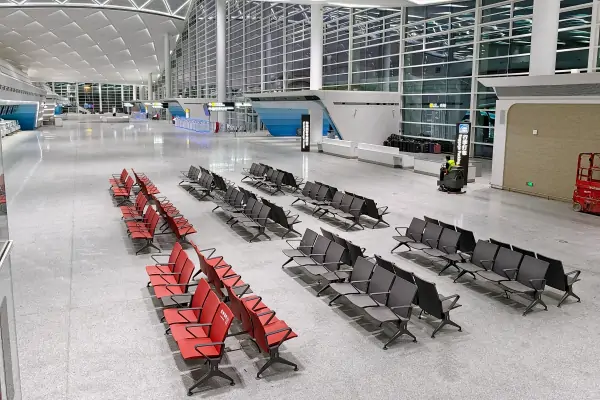
In the past, public seating only addressed the question of "whether there's a place to sit." Today, waiting chairs, through their smooth lines, scientific color schemes, and human-centered design, have become flowing visual elements in the lobby. A neatly arranged row of waiting chairs can guide the eye, making the waiting hall appear more orderly and open.
2. Materials and Colors: The Source of Sophistication
High-quality stainless steel or leather-cushioned waiting chairs, through the contrast between the coolness of the metal and the warmth of the leather, easily blend into modern architectural styles. Low-saturation colors such as light gray and deep space blue can alleviate passenger anxiety without clashing with the main color scheme of the space—this is the "subtractive aesthetics" of public seating design.
3. Layout: Silent Spatial Guidance
A well-planned layout of waiting chairs naturally divides waiting areas, passageways, and commercial areas. Airport waiting chairs often use back-to-back or curved arrangements to reduce awkward eye contact; high-speed rail station waiting chairs tend to be arranged in a single direction for easy passage for passengers carrying large luggage. This design makes the flow of movement clearer and maximizes space utilization.
4. Details Enhance Overall Aesthetics
Hidden designs for armrests, cup holders, and charging ports avoid visual clutter. Multifunctional waiting chairs meet practical needs while maintaining a simple appearance, truly achieving the spatial aesthetic of "less is more."
A good waiting chair is a balancer of function and aesthetics—it doesn't speak, yet it makes the entire space warmer.