

Many procurement personnel, when selecting airport waiting sofas, often find themselves torn between "customization" and "bulk purchase." However, the key factors truly impacting long-term user experience and operating costs are often overlooked—such as the durability of public spaces, the difficulty of cleaning and maintenance, and the compatibility of the seating with the overall traffic flow.
Common Misconception 1: Blindly Pursuing Customization While Ignoring the Reliability of Standardized Seating Airports experience high passenger flow, and waiting areas demand high standards for seating load-bearing capacity, flame retardancy, and ease of cleaning. In contrast, auditorium chairs and public area seating utilize modular designs, prioritizing structural stability and maintenance efficiency. For example, the fold-down design of auditorium benches facilitates floor cleaning and naturally guides passengers to their seats—a feature equally applicable to airport arrival halls and transit rest areas.
Misconception 2: Bulk Purchases Focus Only on Unit Price, Ignoring Long-Term Replacement Costs Sofas purchased in bulk at low prices often experience pilling fabrics and foam sagging within six months, leading to higher replacement frequency. Professional auditorium chair manufacturers offer reinforced aluminum alloy legs, flame-retardant fabrics, and anti-pinch mechanisms for high-load scenarios. Introducing these auditorium chair procurement standards into airport waiting areas can significantly reduce failure rates.
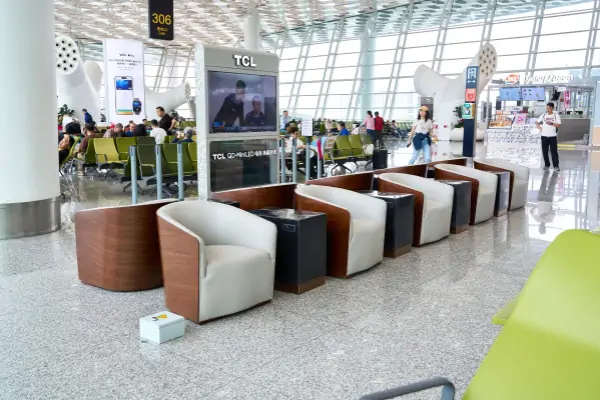
Misconception 3: Ignoring the "Mixed Approach"—Using Auditorium Chairs in the Core Area and Custom Sofas in the VIP Area
In the boarding gate waiting area, use more cost-effective auditorium chairs paired with movable cushions; add a small number of custom sofas to the VIP lounge. This combination controls the budget while meeting the needs of different passengers. Auditorium chair manufacturers typically also offer a full range of products, including waiting chairs and training chairs.
Summary and Recommendations: When updating airport waiting facilities, ask the manufacturer three questions: Has the seat passed a 100,000-cycle durability test? Is the fabric resistant to industrial-grade cleaning agents? Does the row structure support quick seat replacement? These are the more important considerations for auditorium chair procurement than "customization or bulk purchase." Choosing a chair manufacturer with experience in public spaces can often help you avoid most pitfalls.