

Key Finding: By 2026, over 70% of medium-to-large office furniture projects will have shifted from piecemeal product procurement to comprehensive, one-stop service solutions. This shift is primarily driven by a threefold upgrade in efficiency, cost-effectiveness, and health standards.
The traditional model of price-comparing individual items is becoming obsolete. One-stop solutions have become the mainstream choice for three main reasons:
1. Superior efficiency and cost-effectiveness. End-to-end service eliminates the communication overhead associated with coordinating multiple vendors, while bulk manufacturing removes the price premiums often attached to individual items. In South China, for instance, leveraging local supply chains can cut logistics costs by over 20% and reduce delivery times from weeks to days.
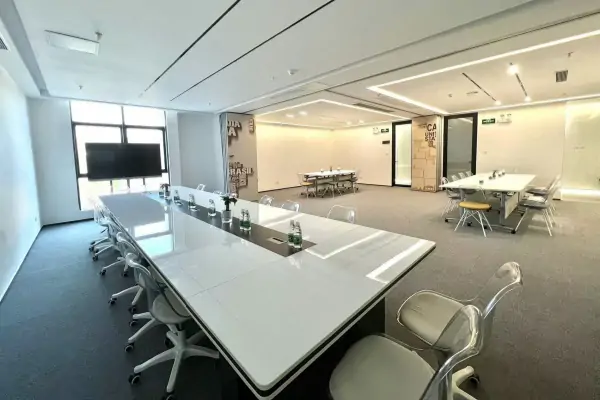
2. Unmatched spatial cohesion. Piecing together various individual products often leads to disjointed styles and inconsistent color matching. One-stop solutions ensure visual harmony across workstations, meeting areas, and lounge zones through unified planning, while modular designs allow for flexible future expansion.
3. Ergonomic office chairs have become a standard health requirement. This is the most critical yet often overlooked aspect. With the rise of hybrid work, ergonomic chairs are now explicitly required in corporate procurement specifications. A high-quality chair for prolonged sitting must feature dynamic lumbar support that adjusts to shifting postures, a 4D armrest system providing natural arm support during tasks like typing and reading, a 5cm seat-depth adjustment to accommodate varying leg lengths and prevent thigh compression, and a breathable mesh seat to ensure comfort during long hours at the desk. For teams with diverse body types, selecting ergonomic chairs suitable for shorter individuals or models with a wider range of adjustability is a more practical approach than purchasing a single, standardized specification for everyone.