

Reducing long-term maintenance costs for airport sofa is not about securing the lowest initial purchase price; rather, it is about managing the total cost of ownership (TCO) starting from the selection phase. Given the high usage frequency and the significant demand for cleaning in airport waiting areas, maintenance expenses typically stem from three main areas: fabric cleaning, repairs for localized damage, and premature disposal. Proactively managing these factors is far more cost-effective than repeatedly performing repairs later on.
1. Select the right materials to reduce the frequency of cleaning and maintenance.
Prioritize wear-resistant, stain-resistant fabrics or PU leather, which allow for easy cleaning with a damp cloth—thereby reducing the need for deep cleaning and minimizing labor hours. For high-traffic areas, focus on specifications such as abrasion resistance (rub count), stain resistance, and compatibility with disinfectants. This serves as the first line of defense in controlling the daily maintenance costs of airport seating.
2. Utilize modular seating to lower repair and replacement costs.
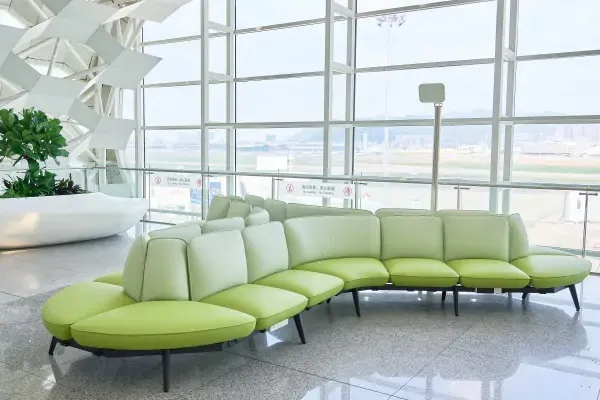
Modular designs allow for the independent replacement of seat cushions, backrests, and armrests, ensuring that localized damage does not necessitate the disposal of the entire unit. During the selection process, verify the interchangeability of components and the long-term availability of spare parts to avoid a situation where you can purchase the furniture but cannot source the necessary replacement parts. Furthermore, modularity facilitates refurbishing—such as replacing upholstery—which extends the service life of public seating.
3. Implement a preventive maintenance program.
Establish a routine that includes daily wiping and inspections, weekly checks of fasteners, and quarterly deep cleaning. This approach helps catch minor issues before they escalate into structural damage. For existing seating, prioritize replacing cushions or upholstery rather than discarding entire units; this allows for a more manageable and gradual approach to capital expenditure.
4. Calculate the total cost of ownership (TCO).
The initial purchase price is merely the starting point; cleaning, repairs, downtime, and eventual disposal are all part of the long-term financial picture. By incorporating criteria such as ease of cleaning, repairable structural design, guaranteed availability of spare parts, and a structured maintenance schedule into the selection process, you can effectively and sustainably reduce the long-term maintenance costs of airport waiting-area seating.